Aluminum Foundry: Advanced Techniques for Precision Components
Wiki Article
Aluminum Castings 101: Comprehensive Information and Quality Solutions for Your Projects
Light weight aluminum spreadings offer a reputable option for numerous sectors, using a special mix of sturdiness and light-weight qualities. Recognizing the various spreading processes is crucial for choosing the most effective approach for certain projects. As modern technology advancements, the landscape of aluminum casting proceeds to change, opening up brand-new opportunities. Discovering the subtleties of these strategies discloses crucial understandings that can influence project end results substantially. What elements should one consider when picking a spreading solution?Comprehending Aluminum Spreading Processes
Aluminum casting processes serve as a foundation for generating a wide array of steel components used in numerous markets. These procedures include the improvement of liquified aluminum into particular forms with mold and mildews. Common methods include sand casting, pass away casting, and investment casting, each offering special benefits based upon the application.In sand casting, a combination of sand and binder develops a mold and mildew, enabling elaborate layouts and greater flexibility in production. Pass away casting utilizes high-pressure techniques to inject molten light weight aluminum right into steel mold and mildews, leading to exact measurements and smooth surfaces. Investment spreading, also referred to as lost-wax casting, enables for extremely detailed parts, making it suitable for intricate geometries.
Recognizing these processes is essential for engineers and manufacturers to select the appropriate technique for their projects. Each method adds distinctive attributes to the last product, influencing its performance and viability for certain applications in different sectors.
Advantages of Utilizing Light Weight Aluminum Castings
The advantages of making use of aluminum castings are substantial, making them a preferred choice across many industries. Aluminum castings offer excellent strength-to-weight proportions, ensuring that elements remain light-weight without sacrificing sturdiness. This particular is particularly useful in applications where decreasing weight is essential, such as in vehicle and aerospace fields.Additionally, light weight aluminum's all-natural corrosion resistance improves the longevity of actors components, decreasing the requirement for safety finishings and maintenance. The flexibility of light weight aluminum permits complex designs and forms, making it possible for makers to generate complicated components with accuracy.
Moreover, light weight aluminum castings exhibit remarkable thermal and electrical conductivity, making them suitable for electric parts and heat-exchanging applications. The recycling capabilities of light weight aluminum additionally contribute to environmental sustainability, as it can be melted and reused with minimal energy expense. On the whole, these benefits underline light weight aluminum spreadings' enhancing adoption in modern-day manufacturing processes, reflecting their efficiency and reliability.
Usual Applications of Light Weight Aluminum Castings
Extensively acknowledged for their convenience, light weight aluminum castings discover application throughout various industries, consisting of auto, aerospace, and electronics. In the automobile sector, they are commonly used for engine elements, transmission instances, and structural parts, using lightweight options that improve fuel effectiveness (Metal Castings). Aerospace applications gain from aluminum spreadings partly such as brackets, housings, and structural parts, where strength-to-weight proportion is crucialIn electronic devices, light weight aluminum spreadings work as units and warm sinks, successfully dissipating heat while supplying defense for sensitive parts. The appliance sector uses aluminum castings for different fixtures and real estates, guaranteeing sturdiness and visual appeal. Additionally, the building sector uses aluminum castings in building aspects and attractive functions, blending functionality with design. Generally, the varied applications of aluminum spreadings show their crucial duty in modern manufacturing, driven by their special residential or commercial properties and versatility to satisfy industry-specific needs.
Types of Aluminum Spreading Techniques
The numerous aluminum casting strategies each deal special advantages matched to various applications. Sand casting is known for its flexibility and cost-effectiveness, while die spreading gives superb dimensional accuracy and surface area finish. Investment spreading, on the various other hand, is celebrated for its capacity to produce intricate geometries with high accuracy.Sand Spreading Process
Sand spreading attracts attention as one of one of the most prominent strategies for aluminum casting because of its flexibility and cost-effectiveness. This process involves creating a mold and mildew from sand, which is then full of molten light weight aluminum to produce a preferred shape. The sand combination generally consists of silica clay, sand, and water, supplying the needed stamina and adaptability for mold formation. Once the molten metal is poured right into the mold and mildew, it cools down and strengthens, after which the sand is eliminated, revealing the cast part. Sand casting is particularly useful for producing complex geometries and huge components. Furthermore, it fits low manufacturing quantities successfully, making it appropriate for models and custom-made components. In general, sand spreading continues to be a fundamental technique in the light weight aluminum spreading sector.
Die Casting Advantages
Pass away casting deals a number of benefits that make it a popular selection in the aluminum spreading field. This technique enables for the production of complex shapes with high dimensional accuracy, reducing the requirement for extensive machining. Furthermore, die spreading is characterized by its rapid manufacturing rate, allowing suppliers to satisfy large-volume needs effectively. The process additionally leads to a smooth surface coating, which reduces post-processing requirements. Furthermore, pass away casting utilizes multiple-use mold and mildews, leading to reduced per-unit costs with time. The intrinsic toughness and lightweight residential or commercial properties of aluminum improve the durability of the end products, making them ideal for various applications. In general, die casting offers a mix of performance, accuracy, and cost-effectiveness that interest numerous industries.Investment Casting Accuracy
Investment spreading is renowned for its accuracy and capability to produce complex layouts with tight tolerances, making it an extremely related to method in the light weight aluminum casting landscape. This technique involves developing a wax pattern, which is covered with a ceramic shell and subsequently heated up to eliminate the wax, leaving a mold for molten light weight aluminum. The low thermal growth of the materials guarantees dimensional precision and repeatability in manufacturing. Investment casting is particularly useful for thin-walled elements and complex forms, which are challenging to achieve with other spreading techniques. Furthermore, the surface coating acquired can often reduce the requirement for substantial machining, additional improving its effectiveness for high-precision elements utilized in different sectors, consisting of aerospace and auto.High Quality Control in Aluminum Casting Production
Quality control in light weight aluminum casting production is vital to guarantee that items fulfill market criteria and consumer assumptions. This involves different examination methods and methods to assess the stability and high quality of the castings. Furthermore, compliance with well established guidelines is critical to keeping item safety and security and efficiency.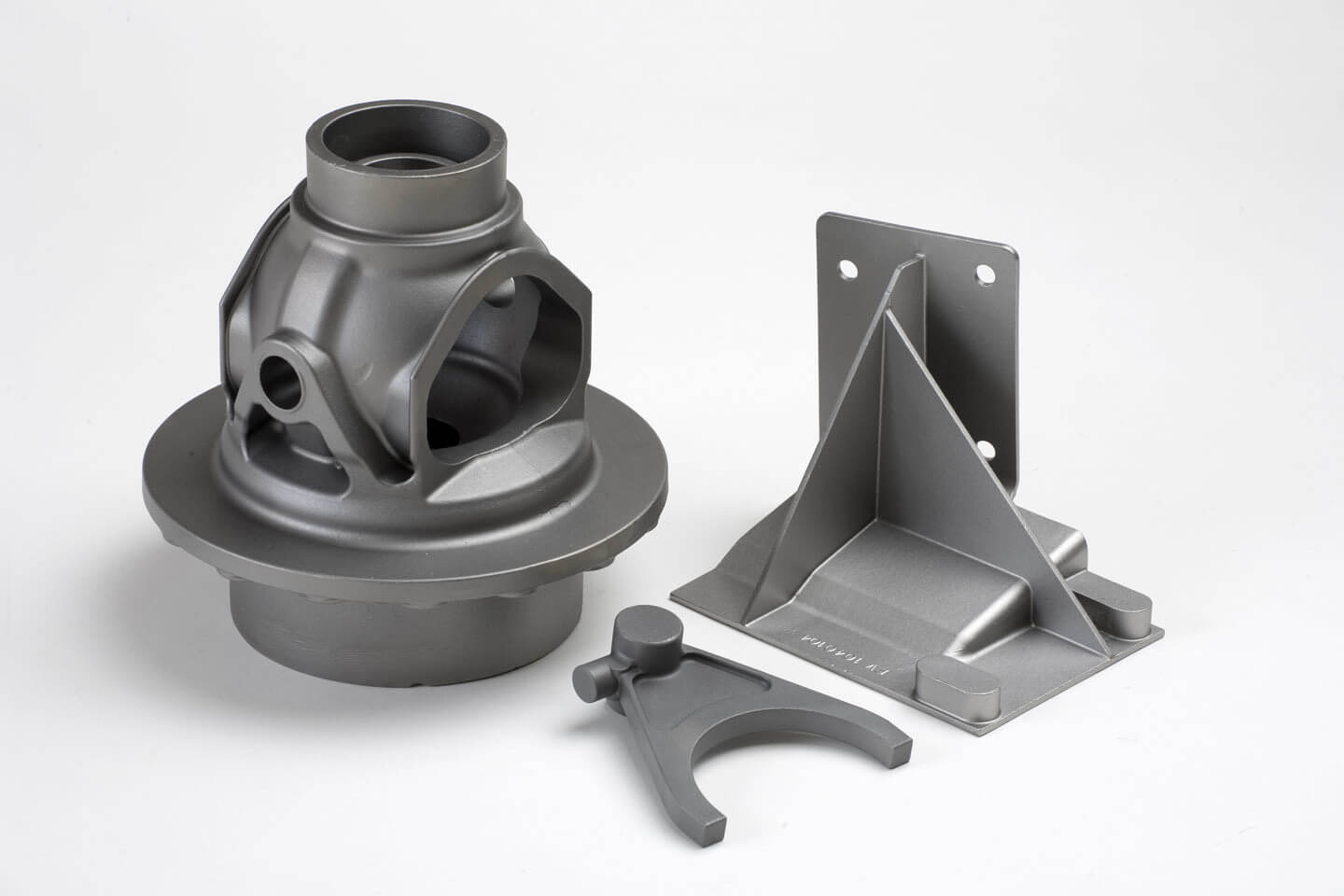
Examination Techniques and Methods
Efficient inspection techniques and approaches are vital for assuring the honesty and performance of light weight aluminum spreadings. Various strategies are employed to spot issues and assure high quality throughout the production process. Aesthetic evaluations are generally performed to identify surface irregularities, while non-destructive testing methods, such as ultrasonic and radiographic evaluations, evaluate inner frameworks without jeopardizing the material. Furthermore, dimensional evaluations utilizing coordinate gauging devices (CMM) validate that castings meet defined resistances. Chemical composition evaluation guarantees that alloy specs are fulfilled, contributing to the overall high quality. Carrying out systematic tasting and statistical procedure control aids monitor manufacturing uniformity. By utilizing these diverse assessment techniques, manufacturers can copyright high standards, ultimately bring about durable and trustworthy aluminum castings for various applications.
Requirements and Compliance Laws
While adhering to strict requirements and conformity policies is Wisconsin Aluminum Foundry essential in light weight aluminum spreading production, it likewise assures that items fulfill market specifications and customer expectations. Conformity with criteria such as ASTM, ISO, and SAE ensures that light weight aluminum spreadings possess the required mechanical buildings, dimensional precision, and surface coating. Makers need to carry out quality assurance systems that include normal audits, testing, and documentation to verify compliance. Furthermore, accreditations such as ISO 9001 demonstrate a commitment to high quality management methods. By following these policies, manufacturers can minimize threats associated with issues and boost item reliability. Inevitably, adherence to developed standards promotes depend on and contentment amongst clients, placing business favorably within affordable markets while promoting constant renovation in manufacturing processes.Picking the Right Aluminum Spreading Service
Just how can one guarantee they choose one of the most suitable aluminum casting solution for their job? To begin, it is vital to analyze the company's experience and expertise in the specific type of aluminum spreading required. Reviewing their portfolio can disclose their ability to take care of similar jobs properly. In addition, examining consumer testimonials and looking for recommendations can provide insights right into their reliability and quality of job.Next, one need to take into consideration the variety of solutions provided, consisting of style aid, prototyping, and ending up options. A complete provider can streamline the manufacturing process and warranty uniformity in quality. Additionally, it is vital to validate conformity with market requirements and laws, ensuring the solution fulfills essential specifications.
Finally, obtaining quotes and contrasting prices structures enables notified choices while taking into consideration value over price. By adhering to these guidelines, one can confidently choose an aluminum spreading solution that satisfies task demands and assumptions.
Future Patterns in Light Weight Aluminum Casting Modern Technology
As the aluminum spreading industry progresses, emerging technologies are established to reshape production processes and improve efficiency. Improvements in additive manufacturing, specifically 3D printing, are allowing fast prototyping and minimized preparations. This technology enables even more complicated designs that were formerly unattainable with conventional techniques. In addition, the combination of fabricated intelligence and artificial intelligence is streamlining high quality control, anticipating defects, and enhancing production schedules.Sustainability remains a critical pattern, with a boosting focus on reusing light weight aluminum and minimizing waste throughout casting. Companies are purchasing energy-efficient heating systems and procedures to lower their carbon footprints. Smart spreading strategies that integrate IoT sensing units are improving monitoring capacities, supplying real-time information to boost functional performance.
These fads indicate a change in the direction of even more ingenious, lasting, and efficient techniques in the aluminum casting industry, guaranteeing that it remains competitive in a swiftly transforming production landscape.
Frequently Asked Concerns
What Is the Normal Lead Time for Aluminum Casting Projects?
The regular preparation for aluminum casting projects varies from four to 8 weeks, relying on variables such as layout intricacy, production quantity, and the supplier's capabilities, making sure top quality and prompt shipment to clients.Just how Do I Identify the Right Alloy for My Task?
To determine the ideal alloy for a task, one should examine mechanical buildings, deterioration resistance, thermal conductivity, and desired application. Consulting with specialists and referencing material requirements can assist the selection procedure properly.Can Aluminum Castings Be Recycled After Usage?
Yes, aluminum spreadings can be recycled after usage. The recycling procedure is effective, saving power and sources. This lasting method aids minimize environmental influence while advertising a round economic climate within the steel industry.What Are the Expense Variables for Light Weight Aluminum Casting Providers?

Exist Environmental Laws Related to Light Weight Aluminum Casting?
Yes, there are ecological regulations associated with light weight aluminum spreading. These laws aim to lessen emissions, manage waste, and guarantee lasting methods, requiring producers to comply with stringent guidelines to secure air, water, and land high quality.Sand casting is recognized for its flexibility and cost-effectiveness, while die spreading provides exceptional dimensional accuracy and surface finish. Sand spreading stands out as one of the most prominent methods for light weight aluminum casting due to its flexibility and cost-effectiveness. Financial investment spreading is renowned for its accuracy and capacity to produce detailed layouts with tight resistances, making it a very related to technique in the light weight aluminum casting landscape. Financial investment casting is especially advantageous for thin-walled parts and complicated shapes, which are testing to achieve with various other spreading strategies. As the light weight aluminum casting market evolves, arising technologies are set to reshape production processes and improve efficiency.
Report this wiki page